Part 2: How We Impacted 500+ NEET Youth Across Six Provinces in Six Weeks : Garden Route Innovation and Technology Hub - GRIT Hub
Part 2: How We Impacted 500+ NEET Youth Across Six Provinces in Six Weeks
Published on: 30 July 2026
By: Marshall Grant
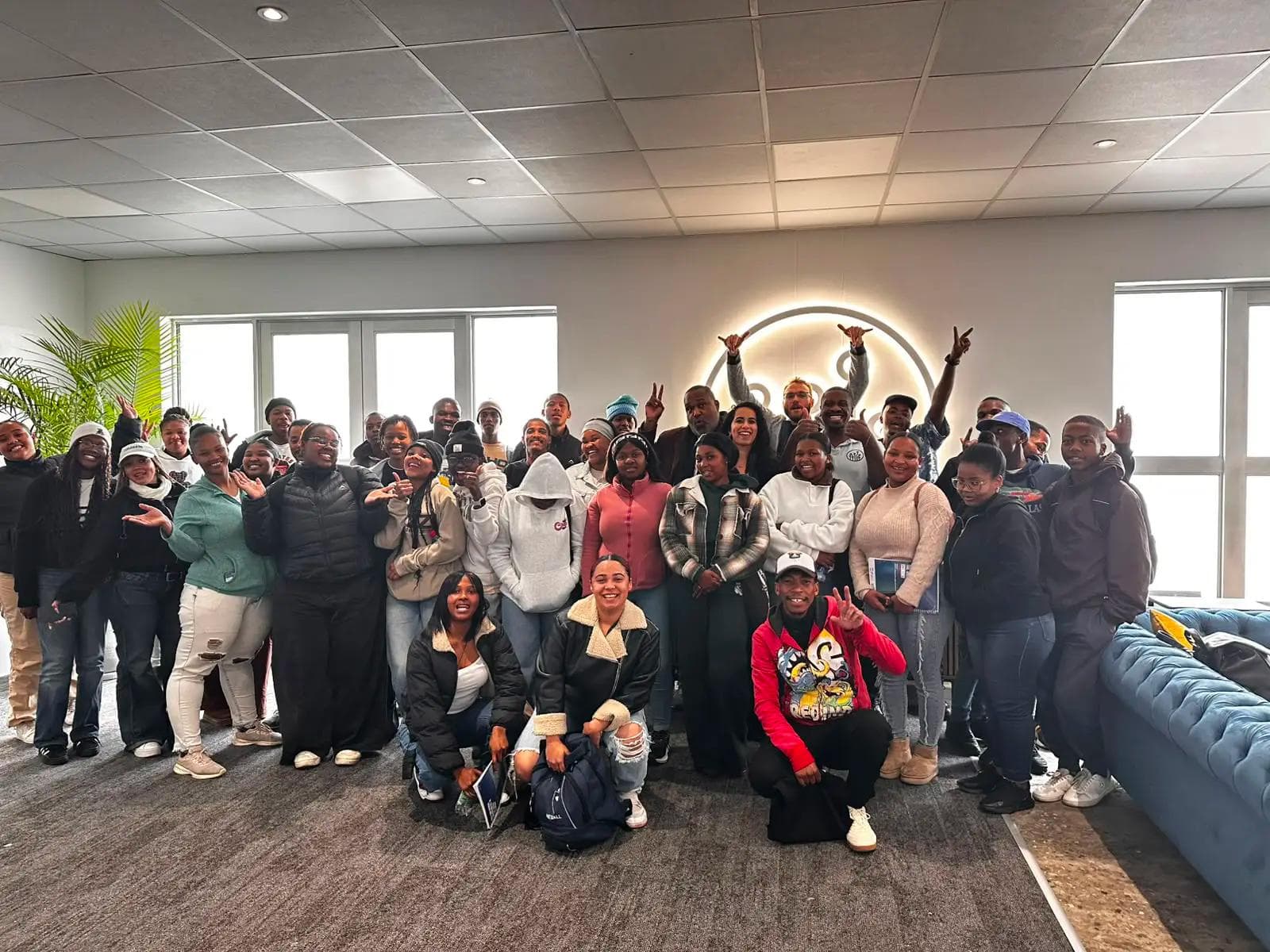
DS4JI II George Cohort of Unemployed Youth held at the Garden Route Innovation & Technology Hub, George
Part 2: Turning Digital Skills Into Income Through Self-Employment and Entrepreneurship
In Part 1, I wrote about one of the biggest challenges we faced during the DS4JI II programme: finding the right young people and then actually getting them into the room.
Once they arrived, we faced a different challenge.
We were sitting with hundreds of young South Africans who already had IT qualifications, training or digital skills. Our pre-assessment showed that participants had experience across software development, web development, cybersecurity, IT support, data, digital marketing, social media and content creation. Yet 65.3% of the 378 young people who completed our pre-assessment told us they had never earned money from those skills.
That was the gap we wanted to work on.
The two-day programme was therefore not designed as another digital skills course but was designed as a Self-Employment Bootcamp, with the objective of helping participants understand the digital economy, identify realistic self-employment opportunities and develop the business and financial knowledge needed to participate in it.
For us, this meant changing the conversation from simply asking, "How do I get a job?" to also asking, "What can I do with the skills I already have?"
Teaching the Things That Often Come After the Qualification
We started with something fairly basic: understanding how a digital skill can become a service.
A young person might know how to develop a website, edit a video, manage social media, analyse data or write software, but that doesn't automatically mean they know how to turn that skill into something a customer will pay for.
Throughout the workshops, we introduced participants to freelancing, remote work, digital self-employment and different ways of generating income from digital and business skills.
From there, we moved into business formalisation. We talked about CIPC registration, SARS, POPIA and why formalising a business matters. We also discussed a question that came up repeatedly in our breakaway groups: why does registering and operating a business seem so complicated when you're doing it for the first time?
Rather than only talking about registration, participants were taken through practical platforms such as My Biz Portal and asked to complete registration activities themselves.
This practical approach became important throughout the programme. We didn't want someone to leave knowing that CIPC or NYDA existed. We wanted them to know where to go, what the platform looked like and what their next step should be.
How Much Should I Charge?
Pricing was one of the conversations that generated a lot of engagement in almost every location.
Someone might know how to build a website, but when you ask how much they would charge a customer to build one, the answer becomes much more difficult. The same applies to graphic design, social media management, data analysis, video editing and most of the other skills represented in the room.
We worked through hourly pricing, project pricing, service packaging and quotations. From there, we moved into client onboarding, professional communication, negotiation, contracts, proposals and invoicing. We even walked through an example quotation and a service-level agreement section by section.
These aren't necessarily the exciting things people think about when we talk about technology entrepreneurship, but they are the things you need to understand if you want someone to actually pay you for your work.
We also spent time talking about finding customers. Participants explored digital marketing, social media, building a portfolio and creating an online presence around the services they could offer.
One of the statistics from our pre-assessment that stood out was that only 57 of 378 respondents had a portfolio or examples of their work. For a group of people trying to enter technology and digital careers, that is a significant barrier. A qualification can show someone what you studied, but in many areas of the digital economy, a customer or employer also wants to see what you can actually do.
Looking at IT Skills Differently
One of my favourite parts of the programme was breaking participants into different career pathways based on their interests and backgrounds.
We created groups around Cybersecurity, Cloud Computing, Software Development, Data Analysis, and Content Development and Multimedia Design. The point wasn't to teach cybersecurity or software development in 30 minutes but to ask them to think about the business opportunities inside those skills.
What problems are businesses having that someone with your skill set can solve? What could you realistically offer as a service? Who would the customer be? What would they pay for? What could you start doing now without waiting for somebody to employ you?
The programme specifically used these breakaway groups to explore the challenges, concepts and business opportunities within each of the five career pathways.
Those conversations were important because self-employment can sometimes be presented to young people as "go start a business", without explaining what that actually means. We wanted participants to start with the skills they already had and work outwards from there.
Entrepreneurship Is Also About Managing Money
The second day went deeper into the realities of operating independently.
We covered banking, budgeting, savings, taxes, cash flow, digital payments and financial planning for freelancers and small businesses. We also had participants discuss the difference between personal money and business money, which led to some interesting conversations about what happens when a new entrepreneur gets their first payment and immediately has competing personal and business needs.
We also introduced participants to funding and support organisations, including NYDA, grants, bursaries, innovation programmes and other support opportunities.
However, we didn't want the entrepreneurship conversation to become another conversation about funding. Starting a business doesn't necessarily begin with a grant. For many of the people in our rooms, the first step could be much smaller: identify a service, find one customer, deliver the work properly, invoice and get paid.
That first R500 or R1,000 earned from an existing skill can sometimes teach more about business than another month spent writing a business plan.
We Identified Four Gaps
Through the inital research from our GFA partners, much of what we were seeing could be organised around four gaps: business formalisation, business skills and knowledge, mentorship, and financial access.
The first two were about helping participants understand how to operate. The other two were about what happens after they leave the room.
We spent time talking about mentorship, but not only in the traditional sense of finding one successful person who will somehow guide you through your entire career. We introduced peer networks, accountability groups, local innovation hubs and entrepreneurship ecosystems. The programme deliberately focused on group mentorship and peer accountability so that young people could build support around each other rather than becoming dependent on one mentor.
We also introduced participants to GRIT Hub, the AfriLabs network, local innovation hubs, coworking spaces and entrepreneurship support organisations that could provide support after the workshops.
This mattered because two days is not enough to build a business.
What Happened After Two Days?
After the programme, 98.2% of respondents said they felt more confident or much more confident about participating in the digital economy. Another 98.5% said that freelancing, remote work or digital self-employment was probably or definitely realistic for someone like them.
Perhaps more importantly, participants were able to identify what they wanted to do next. Among the responses, 86 intended to register a business, 76 wanted to continue developing their digital skills, 55 planned to begin offering digital services, 31 intended to create a freelance profile, 30 wanted to continue into mentorship, 21 planned to build a portfolio and 21 intended to apply for remote jobs.
Only three respondents remained unsure about their next step.
We also asked what parts of the programme they found most valuable. Business setup and compliance received 239 selections, pricing and finding clients received 232, mentorship and networking received 231, income opportunities received 223, and freelancing platforms received 211.
Those responses were interesting because they pointed back to the same issue we identified at the beginning. These young people didn't necessarily need us to teach them another technical skill. They wanted to understand what to do with the skills they already had.
The Workshop Was Never Supposed to Be the End
At the end of the two days, participants were introduced to a six-week mentorship pathway coordinated through my team and I and partner AfriLabs innovation hubs across South Africa. The model included group mentoring sessions, peer accountability, light-touch individual support, ecosystem engagement and referrals into local SMME incubation and support programmes. Participants were also given access to practical tools such as templates, onboarding guides, pricing calculators, content calendars and opportunity directories.
More than 95% of the young people who completed the post-assessment said they were ready to continue into that mentorship pathway.
For me, that is an important number because it tells us that after two full days talking about the realities of self-employment, participants weren't being scared away from it. They wanted more support to try it.
Skills Development Cannot End With Skills
After six weeks, six provinces and more than 500 young people, one of my biggest takeaways from the programme was that we need to think differently about what happens after skills development.
We absolutely need to continue teaching young South Africans digital skills. Technology is changing too quickly for us not to. But we also need to recognise that completing a qualification or training programme doesn't automatically create economic participation.
We met young people who had already done the courses. Some had qualifications. Some could code, design, analyse data, create content or support technology. Yet nearly two-thirds of the people in our pre-assessment had never earned anything from those abilities.
There is a missing step between learning and earning, and that step includes entrepreneurship, self-employment, freelancing, business knowledge, mentorship, access to markets and knowing how to turn something you can do into something somebody is willing to pay for.
The DS4JI II Self-Employment Programme gave us an opportunity to test that approach at scale. Not every participant will become an entrepreneur, and that was never the expectation. Some will find employment. Some will freelance. Some will continue studying. Some will start businesses, and some may decide entrepreneurship isn't for them.
What mattered to us was giving them another option.
For a young person who has spent years waiting for someone to give them an opportunity, sometimes the next step is helping them understand how they might begin creating one for themselves.